

Psychological Safety: What does this mean, what should this look like on a day to day basis, how can leaders role model a psychologically safe environment?
At our last B4 People Ecosystem, Lisa LLoyd of It’s Time for Change shared the following report:
Prioritise People: unlock the value of a thriving workforce – Business in the Community (bitc.org.uk) with McKinsey Health Institute.
Lisa used it as the foundation for our subsequent discussion on psychological safety and commented.
“It underpins many of the 8 workplace factors identified by McKinsey as important in driving employee mental wellbeing outcomes. Failing to address negative workplace behaviour can mitigate the effect of any other Health and wellbeing intervention.”
Amongst other points, the group covered the following:
- Psychological safety is about feeling included, able to learn, free to contribute, and safe to challenge
- Remember that communication is not what you say , it’s what’s experienced when you say it.
- Improving the quality of interactions within a workplace should be top of the agenda. This will make the biggest difference to people being able to be authentic and experience good wellbeing.
- That requires time and mental space, compassion and emotional awareness/ intelligence from managers/ leaders. But these are negatively affected by stress. High emotional arousal drives down psychological safety. Managers need to put their own oxygen mask on first.
- Managers and leaders need clarity about their role – who we are/ how we operate is important. Is our role about hierarchy/ authority/ power? How do we show up? What do we want to experience? What do others need from us?
- Where do ‘what we want’ and ‘what others need’ align or are they disconnected? They need to be in sync for psychological safety.
- We need to be explicit about creating a safe space, with intention. Do we ask how to achieve this? A psychologically safe space requires everyone to have an input into what this will look and feel like for them.
- Discuss what gets in the way of working well together – to feel comfortable, safe to speak, to be heard and disagree.
- Agree how to call out behaviours that get in the way of psychological safety – without judgement.
- Use language e.g. ‘I don’t know’ and ‘I got it wrong’ – to model vulnerability.
- Be honest about how vulnerability might show up e.g. I become defensive – discuss our defaults!
- Listen to what’s not said – requires an intention to notice (and emotional intelligence)
- Ask people more than telling them.
- Encourage experimentation and make it clear that as a result, you expect mistakes that can be learnt from.
- Specifically request different opinions i.e. invite challenge.
- Admit when you’re feeling uncomfortable talking about a subject, but that you’re not going to let that get in the way of the discussion. Make your intention to learn clear, and make it ok to get language/ terminology wrong – show you’re open to being better informed.
Lisa asked the Members one final question: “Who is looking after the managers/ leaders to enable them to create a psychologically safe environment? Data shows that these people experience loneliness, overwhelm and the need to wear a mask. Are companies investing in their support and development? Are the right people in those roles?”
To explore what psychological safety means and looks like in your organisation, please do get in touch with Lisa who added “I’m happy to discuss how best to support your managers and leaders to get the work environment right for every employee to thrive and perform well.”
Lisa LLoyd
It’s Time for Change
Lisa@itstimeforchange.co.uk

More in Conference & Events

HENLEY FESTIVAL’S SPECTACULAR LINE-UP FOR 2026
Henley Festival Presented by Hemani is thrilled to reveal a dazzling line-up for five magical summer nights from 8-12 July 2026 with headliners on its iconic Floating Stage including Boy George & Culture Club, Sugababes, Lulu, and Alex James’ Britpop Classical.

Women’s Leadership Takes Centre Stage at Randolph Hotel Networking Breakfast
On a morning that perfectly captured the spirit of International Women’s Day, The Randolph Hotel Oxford hosted an inspiring “Empower, Connect & Inspire” networking breakfast, bringing together a room full of ambitious women and community leaders to celebrate leadership, resilience and wellbeing in the workplace.
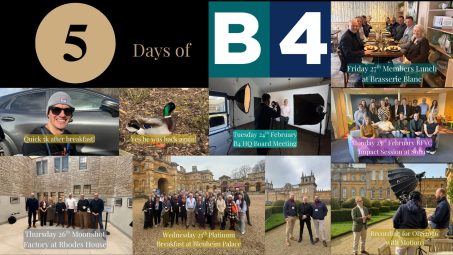
Five days. Five gatherings. One consistent theme: purposeful collaboration.
Last week was one of those weeks that reminds me exactly why B4 exists.
From this author
Building Cultures Where People Belong and Perform
By Lisa LLoyd, Psychologist & Founder, It’s Time for Change

Change is challenging
But there are ways of making it feel safer when you’re intentional about how you lead people through the process.
The Importance of Challenging Conversations in the Workplace
In March the People Ecosystem was lucky enough to be joined by Sally Naunton, CEO of The Bray Group. Having worked with Sally to help unpick some work challenges, I know she has a brilliant blend of being caring whilst expecting high performance and not shying away from the space that’s about tricky conversations. I spend a lot of time helping clients in this space which is why I wanted to get stuck into the subject of feedback, particularly when it feels uncomfortable and is about poor performance.