


Change is challenging
But there are ways of making it feel safer when you’re intentional about how you lead people through the process.
At the recent B4 People Ecosystem, I asked everyone to think about their own experience of change and some of the many reasons that people naturally resist. When we understand that, we can reframe difficult behaviour as needing empathy. And when, as leaders, we’re able to join employees where they’re at and meet their needs, we’re more likely to be successful leading them through periods of uncertainty and change.
Jo Stevens, MD at Oxford Innovation Space, brought this to life when she shared her impressive story of growth. Some of Jo’s key points for leaders to consider (with a few ideas of my own):
- Being authentic is essential. Show you’re human, including the tears if they come naturally, and owning your mistakes (you will make them!).
- Monthly Town Halls that include profit and loss and how the organisation is doing relative to the overall goal.
- The strategy needs to include why it is your organisation exists.
- Away days to develop the strategy, including what works, what doesn’t and what’s still needed. My own experience is that people strategy can miss the critical link between a plan and lived experience.
- Leaders can NEVER over-communicate (I concur).
- Accept you can’t please everyone (but be mindful that you should try to understand different needs that could be intellectual, emotional or personal – and these should form part of your resistance action planning)
- Working groups can help inform everyone about change – communicating both up, down and across the organisation.
The Ecosystem wrapped up with a peer consultation session, problem-solving one leader’s challenge around a company’s decision to insist on a minimum of 4-days in the office. This was a really interesting and very timely discussion, with many leaders working out how to navigate this.
If you want to find out more about any of these topics, drop me a line at lisa@itstimeforchange.co.uk or connect with me on LinkedIn.
And join us on 16th October to find out about the importance of intentionality for how leaders show up at work. Megan Carter of Blenheim Palace will be joining us to share her insights. Book your place here www.b4-business.com/event/people-ecosystem-roundtable-discussion-at-b4-hq-3/.

More in People

Abingdon & Witney College ranked among England’s top apprenticeship providers
Staff at Abingdon & Witney College are celebrating national recognition following the publication of the latest National Achievement Rate Tables (NARTS), which confirm the College as one of the leading apprenticeship providers in England. The newly released figures for the 2024/25 academic year show that the College ranks 5th nationally among General Further Education colleges […]
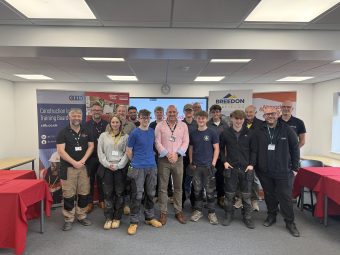
Learners shine at Construction Trade Skills Competition 2026
On Wednesday 6th May, learners from across Abingdon & Witney College showcased their talent, professionalism and technical expertise at their inaugural Construction Trade Skills Competition.
B4 People Ecosystem: Wellness, Engagement & Performance
This People Ecosystem session, led by Andy Caldicott of Arvra Wellness, explored the increasingly critical role of employee wellbeing as a driver of organisational performance.
From this author
Building Cultures Where People Belong and Perform
By Lisa LLoyd, Psychologist & Founder, It’s Time for Change
The Importance of Challenging Conversations in the Workplace
In March the People Ecosystem was lucky enough to be joined by Sally Naunton, CEO of The Bray Group. Having worked with Sally to help unpick some work challenges, I know she has a brilliant blend of being caring whilst expecting high performance and not shying away from the space that’s about tricky conversations. I spend a lot of time helping clients in this space which is why I wanted to get stuck into the subject of feedback, particularly when it feels uncomfortable and is about poor performance.
Increasing Employee Care about the Brand
Poorly paid roles need different ways of motivating people to care about the service they provide. That was one of the conclusions arising from the recent B4 People Ecosystem problem-solving session.