

Devolution and Local Government Reform in Oxfordshire and beyond
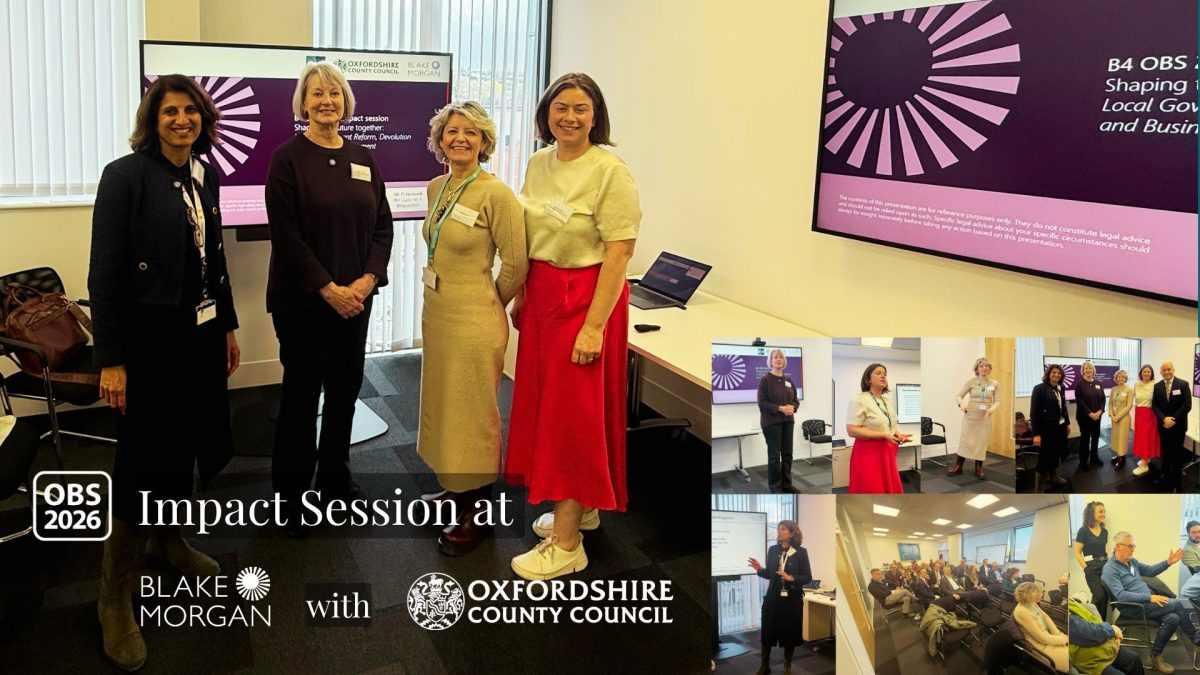
Our final OBS2026 Impact Session focused on the future governance of Oxfordshire, bringing together business leaders, council officials and policymakers to explore opportunities for regional growth and development.
Our final OBS2026 Impact Session focused on the future governance of Oxfordshire, bringing together business leaders, council officials and policymakers to explore opportunities for regional growth and development.
Held at the offices of OBS2026 sponsors Blake Morgan, this timely session examined devolution and Local Government Reorganisation (LGR) at an important time for Oxfordshire. Discussions focused on the importance of understanding how changing administrative structures will impact businesses, communities and the region’s future.
As hosts, Penny Rinta-Suksi, Partner at Blake Morgan, welcomed guests and kick-started the event with an opening address and overview of the LGR through a legal lens.
This was then followed by:
1. Local Government Reorganisation: The Options
Cllr Liz Leffman, Leader of Oxfordshire County Council
Cllr Leffman outlined the Government’s proposals for reorganising local government in Oxfordshire, setting out three possible Unitary Authority models.
The County Council’s preferred option is a single Unitary Authority for Oxfordshire, bringing services together under one council. This approach is expected to deliver £63m in annual savings, make services easier to access for residents and businesses through a “one‑door” model, protect vital services, and give Oxfordshire a stronger, unified voice in future devolution discussions.
Alternative models were also explored. A two‑unitary option would involve cross‑boundary mergers with Berkshire, while a three‑unitary option would centre on a Greater Oxford Development Corporation. Both were noted as carrying greater complexity, higher risk and more fragmented governance arrangements.
2. What Devolution Would Look Like in Practice
Kim Sawyer, Programme Director for Devolution, Oxfordshire County Council
Kim explained how devolution could work in practice, drawing on examples from established mayoral regions such as Manchester and Liverpool.
A key proposal is the potential creation of a Thames Valley Mayoral Authority, covering Oxfordshire, Berkshire, Buckinghamshire and Swindon. If agreed, this would be introduced between 2028 and 2029 and could position the Thames Valley as a leading economic region alongside London and Manchester.
Kim highlighted the benefits of mayoral leadership, including clearer accountability, stronger influence with Government, better coordination across sectors, and the ability to plan for the long term beyond electoral cycles. Devolution could also support significant economic growth across the region.
3. Opportunities for Oxfordshire and the Wider Region
Helen Mitchell, Programme Director for Local Government Reorganisation, Oxfordshire County Council
Helen focused on the opportunities that reform and devolution could unlock for Oxfordshire.
She highlighted the growing importance of the Oxford–Cambridge Corridor, where Government funding has recently been doubled to support innovation space, transport connectivity, employment growth and business development.
Helen also discussed the potential role of the Greater Oxford Development Corporation, inspired by large‑scale regeneration models such as Canary Wharf and the London Olympics. With enhanced planning powers, it could help accelerate development and investment across the region.
In addition, she referenced a new Memorandum of Understanding between Oxford and Liverpool councils and universities, demonstrating a shared commitment to innovation, research‑industry collaboration and the UK’s industrial strategy.
4. What This Means for Business
Businesses attending the session highlighted the need for clear leadership, long‑term vision and greater certainty.
Key themes included:
· Improving infrastructure and transport integration
· Tackling housing affordability
· Better aligning skills and employment
· Strengthening support for small businesses
A more unified and strategic regional structure was seen as a way to address these challenges more effectively and at scale.
5. Looking Ahead and Next Steps
Plans for Local Government Reorganisation and devolution are now moving into the next phase. Councils have submitted proposals to Government, and the focus is shifting to public engagement, consultation and refining the final approach.
Over the coming months, residents, businesses and community organisations will have opportunities to share their views through formal consultation. Feedback will play a key role in shaping final decisions on Oxfordshire’s future governance.
The session also underlined the importance of early involvement from businesses and partners, particularly around planning, transport, skills and housing. This work will help ensure future arrangements support economic growth, public services and local communities.
The Oxfordshire Business Summit at Blenheim Palace on 15th May 2026 will be an important milestone, offering a further opportunity to hear updates, ask questions and continue the conversation. In parallel, councils will explore pilot projects and innovation initiatives, helping turn ideas into practical action.
Together, these next steps will shape how Oxfordshire is governed in the years ahead. Continued engagement from residents, businesses, universities and communities will be essential to delivering clear benefits and supporting a shared vision for the region’s future.
Warning: Undefined array key "author_person" in /home/b4business/public_html/wp-content/themes/b4-2020/functions.php on line 121
Warning: Trying to access array offset on value of type null in /home/b4business/public_html/wp-content/themes/b4-2020/functions.php on line 121
More in Professional Services

Freeths reveals a record 97 promotions across the firm, building on...
Leading law firm Freeths has announced a record 97 promotions across the firm, including eight new partners, marking a significant year of expansion and investment in its people. This builds on last year’s promotions round, reflecting the firm’s continued investment in developing its people. Over the last five years, Freeths’ talented people have consistently been […]

UK business confidence has dipped – resilience remains, but geopolitics is...
That is the overriding message from the Thames Valley Chamber of Commerce’s Q1 2026 Quarterly Economic Survey (QES), which reveals a business community continuing to operate, adapt and trade – but with confidence still fragile. The Quarterly Economic Survey (QES) is a comprehensive study conducted every three months by the Chamber of Commerce, gathering feedback from businesses across the Thames Valley region. It tracks key indicators such as sales, orders, employment strategy, investment plans and overall business sentiment, providing a snapshot of the regional economic climate and highlighting challenges and opportunities faced by firms.

Exit readiness: why it matters and how to prepare your business
For many business owners, exit planning only becomes a priority when a buyer appears. By that stage, pressure is high, options are limited, and value can easily be left on the table.
From this author
Blake Morgan renews B4 membership to help strengthen business relations
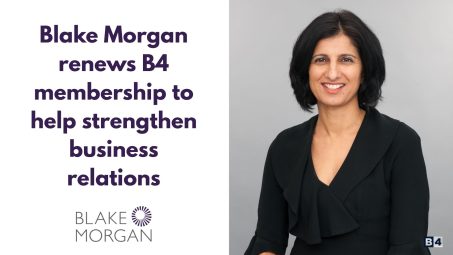
Blake Morgan has renewed their membership of the B4 Business Community, helping to strengthen their business relationships in the Thames Valley.
80TH BIRTHDAY CELEBRATIONS FOR OXFORD PARTNER AFTER 46 YEARS AT LAW...
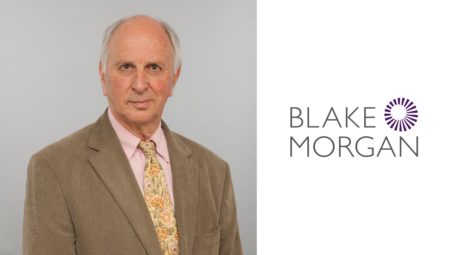
This month an institution in the Oxford legal sector, John Deech, has celebrated his 80th birthday, which comes as he remains an active full-time partner at law firm Blake Morgan. John’s colleagues threw him a surprise birthday party – reflecting on the almost 50 years he has worked at the firm and marking this milestone.
BLAKE MORGAN’S THAMES VALLEY TEAMS CELEBRATE TOP RANKINGS IN CHAMBERS &...
Thames Valley lawyers from Blake Morgan are celebrating success in the 2023 edition of the prestigious Chambers & Partners Guide, which recognises and recommends the best-performing lawyers and legal firms across the UK. 10 of the firm’s teams based in the Thames Valley were selected for praise in the Guide, along with 20 individual lawyers – showcasing the firm’s wide range of specialisms and excellent client service.