

University and business collaborations fell by a third in early days of the pandemic, NCUB’s new analysis shows
In just one year, there was a 39% fall in the number of SME interactions and a 2% fall in the number of interactions with large businesses. Despite falls in the number of interactions, universities’ contribution to research commercialisation grew in 2019/20, with the number of licenses granted increasing by nearly a third (30%) compared with 2018/19.
Dr Joe Marshall, Chief Executive of the National Centre for Universities and Business (NCUB), said: “New analysis, published today, shows that the number of collaborations and partnerships between universities and businesses fell during the Covid-19 pandemic. Between 2018/19 and 2019/20 the number of interactions fell by nearly a third. University-business collaboration is vital to recover, grow and attract private research and development (R&D) investment. Collaboration is essential to achieve the Government’s target of spending 2.4% GDP in R&D by 2027, as well as developing the highly skilled workforce needed for the future.”
Marshall continued: “For the first time, our Collaboration Progress Monitor, which tracks business-university collaboration, revealed the worrying impact the pandemic had on university-business partnerships. Whilst this period saw high profile collaborations form, such as the work to create lifesaving vaccines, it also saw offices, labs and collaborative spaces close, and many activities delayed or halted. What’s more, alongside the pandemic, other barriers to collaboration were economic challenges such as skills shortages, with vacancies hitting an all-time high, and supply chain issues. In no uncertain terms, collaboration will be vital to the UK’s future success. To realise the UK’s ambition to become a more innovative, prosperous and highly skilled economy, ties between businesses and universities will need to be strengthened in the years to come.”
Marshall concluded: “However, it is not all doom and gloom. The new analysis also reveals exceptionally high levels of research commercialisation activity. Universities have put significant effort into supporting and maintaining their partnerships with their communities and businesses. Across a range of indicators, universities have ramped up activity and engagement in a clear sign of their centrality in combatting the crisis and leading recovery. Key research commercialisation indicators, including licenses, patents and spinouts, grew. The number of new licences granted by universities grew by a third over a single year. It’s hugely positive that the nation’s universities have continued to invest in, not away from, collaboration, research and innovation. Innovation is key if we are to become a science superpower: it is the silver bullet to help fuel our recovery.”
About the NCUB
The National Centre for Universities and Business (NCUB) represents a collective voice of leaders across higher education and business and aims to tackle issues of shared interest. The NCUB is an independent and not-for-profit membership organisation that promotes, develops and supports university-business collaboration across the UK. The organisation was originally established in 1986, and NCUB was formed in 2013.
About the State of the Relationship Report 2021
Published annually, the 2021 report is the eighth edition of the State of the Relationship. The report, which is commissioned by UK Research and Innovation, showcases the strength and diversity of collaborations across the UK and provides an updated assessment of the metrics on collaboration between universities and business.
The Collaboration Progress Monitor (CPM) forms part of the report, and is a bespoke tool tracking progress in UK university-business collaboration. It identifies emerging trends through 25 metrics. The CPM also compares data to a 5-year average to track trends.
Read the report here: https://bit.ly/3lrdANz and read a summary of the key findings here.
Warning: Undefined array key "author_person" in /home/b4business/public_html/wp-content/themes/b4-2020/functions.php on line 121
Warning: Trying to access array offset on value of type null in /home/b4business/public_html/wp-content/themes/b4-2020/functions.php on line 121
More in Education

Keble College renews Platinum Membership with B4
Keble College has renewed its Platinum Membership with B4, reaffirming its commitment to supporting and engaging with Oxfordshire’s dynamic business community. As a long-standing and highly valued partner, Keble continues to play an important role in bringing together business leaders through exceptional events hosted in its iconic setting.

Local MP Charlie Maynard visits Abingdon & Witney College’s Witney campus
Abingdon & Witney College welcomed local MP Charlie Maynard to its Witney campus on 27th March, where he met with Principal and Chief Executive Jacqui Canton and Deputy Principal Jo Milsom, and toured a number of teaching areas. The visit formed part of ongoing discussions about skills, education, and the needs of young people and employers across West Oxfordshire.

The University of Oxford Joins B4
The University of Oxford has recognised B4, one of Oxfordshire’s leading business-to-business networks in B4’s 20th anniversary year by becoming a Platinum Member. The partnership highlights the strength of B4’s community which includes some of Oxfordshire’s most respected organisations.
From this author

B4 welcomes Simon Robinson of Nexa Law as our latest Gold...
At Nexa, client relationships come first. The firm prioritises understanding individual needs, without rigid fee structures or billing targets—giving solicitors the freedom to focus on meaningful work and lasting partnerships.

Pioneering planning scheme shortlisted for economic growth award
An exciting planning project in the Vale of White Horse has been recognised by being shortlisted for an industry award.
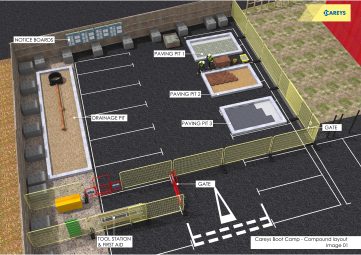
Pioneering Careys Construction Campus to be piloted at Oxford North
Oxford North, the new £700 million innovation district in Oxford, is to welcome Careys Construction Campus to provide free, flexible on-site ground working construction training which will guarantee an offer of an interview on completion of the training and boost jobs and talent in the industry.