

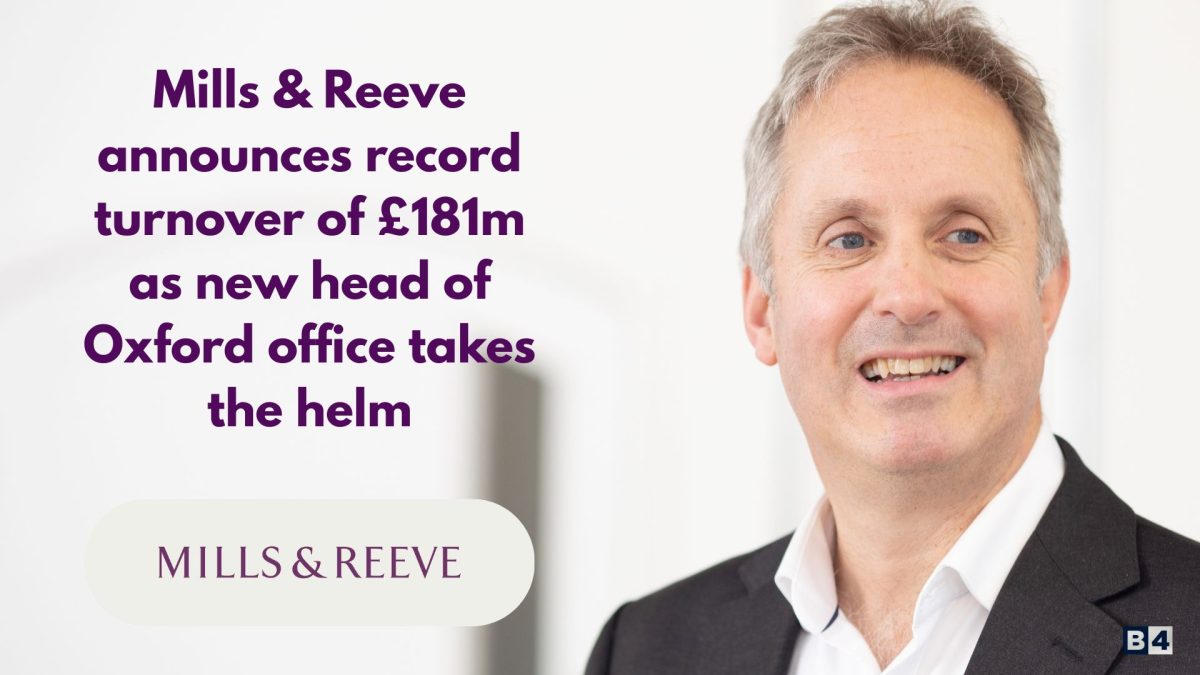
Mills & Reeve announces record turnover of £181m as new head of Oxford office takes the helm
Leading UK law firm Mills & Reeve has announced turnover growth of £13 million over the 2024/25 financial year, resulting in a new high annual turnover of £181 million. Its Oxford office has seen standout success, with 55% fee growth and a new head of office appointed to lead its next chapter.
As in previous years, staff have shared in the firm’s growth through the annual all-staff bonus. This year’s bonus pool, which is directly linked to the firm’s profits and varies each year, was £1.4 million, meaning the majority of staff received a bonus of at least £1,000.
The strong financial results follow another successful year which has achieved several significant milestones and embarked on a range of exciting projects, including:
- Major investment in 21 new partners over the last 12 months, including Laura Ludlow in Oxford.
- Increased Fearless Feedback scores with 90% of clients saying they would recommend the firm, getting closer to the 2030 target of 95% client recommendation.
- A refreshed set of values after consulting with more than 750 staff.
- Strengthening our international offering to clients and re-branding to M&R Global, with the aim for 40% of all work to have an international element by 2030.
- Seeking to drive success through technology by rolling out CoPilot, Kira and other AI solutions across the firm while continuing to look at additional GenAI tools to support lawyers and business services. Nine new AI solutions have recently been piloted across the business as part of an ambitious programme of driving technology-enabled client service improvements.
- Having been ranked for 20 consecutive years in Best Companies to Work For, we’ve now been ranked in The Sunday Times’ Best Places to Work Awards Best Big Organisations for the last two years.
- Official validation of our science-based targets by the SBTi, confirming our near-term and net-zero ambitions align with the 1.5°C pathway. This marks a major milestone in our commitment to climate action.
Mills & Reeve’s Oxford office has delivered a standout performance this year, achieving an impressive 55% growth in fees and marking a new chapter in its leadership, following Peter McLintock’s transition to a consultancy role.
The firm acknowledges the significant contribution of Peter McLintock, who recently retired from the partnership and his role as head of the Oxford office. Peter continues to support the firm as a consultant, focusing on the development of business across Oxfordshire and the greater Ox-Cam growth corridor.
William Downing will lead the continued growth of the office, representing Mills & Reeve in the market and championing the nationally acclaimed legal services provided by the firm. This appointment reflects the firm’s ongoing investment in Oxfordshire, reinforcing its long-standing commitment to legal excellence and regional growth.
Commenting on his appointment, William said: “It’s a privilege to take on this role and continue building on the strong foundations laid by Peter. Oxfordshire continues to be a dynamic and innovative region, and I’m excited to lead our talented team of 30+ lawyers in Oxford as we provide high-quality specialist advice, deepen our relationships and expand our impact across Oxfordshire and the greater Ox-Cam growth corridor.
“Mills & Reeve has shown a strong performance in the face of challenging market conditions, and the firm has continued to invest in our people, technology and offices to push forward with our ambitious 2030 strategy.”

More in Professional Services

Exit readiness: why it matters and how to prepare your business
For many business owners, exit planning only becomes a priority when a buyer appears. By that stage, pressure is high, options are limited, and value can easily be left on the table.

Mills & Reeve advises on the sale of TFP Fertility to...
Mills & Reeve has advised on the sale of leading international fertility services provider, TFP Fertility, to a US private equity investor.

How the Thames Valley and Solent regions align with the government’s...
The government’s 2025 industrial strategy (IS-8) sets out a clear ambition to drive productivity, innovation, and globally competitive growth across eight priority sectors. The Thames Valley and Solent, spanning Berkshire, Oxfordshire and Hampshire, is already delivering strongly against these goals, underpinned by an innovation-led, IP-rich, and service-focused economy.
From this author
Mills & Reeve advises on the sale of TFP Fertility to...
Mills & Reeve has advised on the sale of leading international fertility services provider, TFP Fertility, to a US private equity investor.

Mills & Reeve announces sponsorship of inaugural Ox Tech Week
Mills & Reeve has announced its sponsorship of the inaugural Ox Tech Week, taking place from 26 to 29 May, supporting a landmark event that will shine a spotlight on Oxford’s world leading innovation ecosystem.

End of 2025: Business reflections from Mills & Reeve
As we wrap up 2025, it’s a good moment to pause and reflect on what’s been an eventful year for Oxfordshire and to look ahead at what’s on the horizon for 2026.