


Mills & Reeve building legal excellence in Oxford
Mills & Reeve is pleased to highlight the continued growth and success of its Oxford office, which has become a key part of the firm’s national presence since opening in 2022. The office has quickly established itself as a trusted legal partner to the region’s thriving business and innovation communities.
The firm acknowledges the significant contribution of Peter McLintock, who recently retired as head of Oxford office and from the partnership, but continues to support the firm as a consultant, focussed on development of business across Oxfordshire and the greater Ox-Cam Growth Corridor. Peter’s leadership and connections made in the region have played a pivotal role in laying the foundations for the office’s success.
Following Peter’s change of role, William Downing has stepped up as the new head of Oxford office. William, a specialist employment and HR solicitor, with over 24 years of experience of working in the local ecosystem, is committed to further strengthening the firm’s presence and relationships across Oxfordshire and beyond.
Mills & Reeve is a law firm that believes that by building connections with their clients, their people and the communities they work in, they can do great things. They call this approach “Achieve more. Together.”. With seven offices across the country, the firm advises businesses, individuals and institutions with a wide range of legal services across a number of sectors. The Oxford office focuses particularly on supporting the region’s life sciences, technology, education, real estate investment and private client/family sectors.
Mills & Reeve joined B4 shortly after opening its Oxford office in 2022. They credit B4 with playing a key role in helping it connect with the local business community and raising its profile in the region.
“B4 provided an invaluable platform for us to meet like-minded professionals and organisations. Their support has been instrumental in helping us integrate into the Oxford business ecosystem,” said Peter McLintock.
B4’s CEO, Richard Rosser, added. “From day one it has been our huge pleasure and privilege to have Peter and his brilliant team as part of the B4 community. They are fantastic at what they do but also the most decent people you would wish to meet and have been a perfect fit in the B4 community since they joined. It’s great to see Peter will still be around to support them as William takes the reigns and we all wish them both the very best of luck in their new roles.”
Businesses and professionals are invited to subscribe to Mills & Reeve’s Oxford office newsletter, which provides legal updates, event invitations, and insights tailored to the local business community, or to contact our senior business development manager, Robert Pinheiro: robert.pinheiro@mills-reeve.com
Warning: Undefined array key "author_person" in /home/b4business/public_html/wp-content/themes/b4-2020/functions.php on line 121
Warning: Trying to access array offset on value of type null in /home/b4business/public_html/wp-content/themes/b4-2020/functions.php on line 121
More in Professional Services
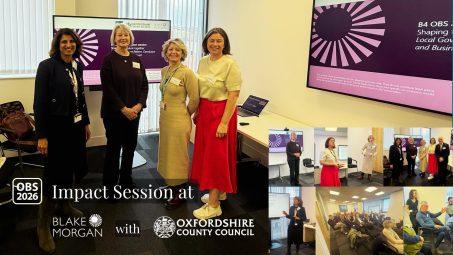
Devolution and Local Government Reform in Oxfordshire and beyond
Our final OBS2026 Impact Session focused on the future governance of Oxfordshire, bringing together business leaders, council officials and policymakers to explore opportunities for regional growth and development.

Mills & Reeve announces sponsorship of inaugural Ox Tech Week
Mills & Reeve has announced its sponsorship of the inaugural Ox Tech Week, taking place from 26 to 29 May, supporting a landmark event that will shine a spotlight on Oxford’s world leading innovation ecosystem.

Freeths sets 2040 net zero pathway with release of first firm‑wide...
Leading law firm Freeths has just published its first Net Zero Transition Plan, marking a major step forward in the firm’s long-term commitment to responsible business. The plan sets out a clear, science-aligned pathway to achieving net zero across the value chain by 2040, underpinned by newly validated near and long-term targets from the Science […]
From this author
Mills & Reeve announces sponsorship of inaugural Ox Tech Week
Mills & Reeve has announced its sponsorship of the inaugural Ox Tech Week, taking place from 26 to 29 May, supporting a landmark event that will shine a spotlight on Oxford’s world leading innovation ecosystem.

End of 2025: Business reflections from Mills & Reeve
As we wrap up 2025, it’s a good moment to pause and reflect on what’s been an eventful year for Oxfordshire and to look ahead at what’s on the horizon for 2026.

Innovation gap opening due to varying AI adoption – Mills &...
An innovation and governance gap is opening up between businesses that realise the potential of GenAI and those that see its impact as limited, our new report has found.
According to The Critical AI Window, organisations that don’t find ways to capitalise on the potential of AI to drive innovation and growth run the risk of being left behind. As a result, competitive edge is at risk.
Our report shows that less than a third of businesses (31%) are using GenAI, with only one-fifth (22%) seeing it as high value.
Paul Knight, partner at Mills & Reeve said: “There is a clear divide amongst businesses – between those that have bought into AI and are building systems and processes around it, and those that are still unsure of its impact beyond mid- to low-value tasks, such as reducing administration and improving efficiencies and productivity.
“This divide is opening up an innovation and governance gap, as early innovators seize on the opportunities that AI presents. While our research shows that the number of businesses using GenAI is likely to rise to 72% by 2027, the lag in performance between then and now could become insurmountable.”
The report highlights the biggest concerns felt by businesses over AI adoption. The majority (90%) are concerned about inaccuracy, more than eight in ten are worried about safety risks (85%), such as cyber attacks, with the impact on future employment also a cause for concern. However, despite 83% of respondents stating that are worried about regulatory compliance, only 31% of businesses have a risk mitigation strategy in place.
Paul added: “The explosion of GenAI has seen a raft of regulations introduced across the world, with more likely, and all of them subject to change as AI understanding develops. In the UK, the regulation of AI relies on existing legal frameworks such as intellectual property, data protection and contract law, highlighting the growing need for these frameworks to be adapted to address the novel risks and complexities introduced by AI technologies. All this suggests that there will be no steady state for regulation for some time.”
However, the risk of not complying is significant, both reputationally and financially. Within the EU, under the EU AI Act, for example, violations can cause administrative fines of €35 million or 7% of total global turnover, whichever is greater.
“There is a real need for businesses to set their own guardrails as legislation in the UK catches up. If they don’t fully understand the legal and ethical boundaries – whether around data protection, intellectual property, or equality law – the consequences could be profound. A single misjudgement could expose the organisation to group litigation.”