B4 Events
Over 60 events a year, from leadership challenge discussions to large-scale summits
29
Oct
2026
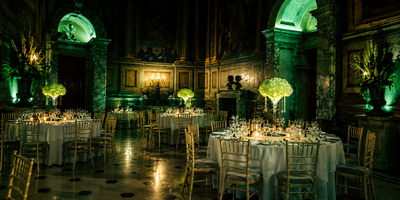
Platinum Dinner at Blenheim Palace
B4 Members are invited to join us for an extra special evening in the wonderful Blenheim Palace.
Steeped in history, this is one of the most magnificent settings for a dinner you could wish for and our good friends at Blenheim are welcoming the B4 community to enjoy this black tie dinner, great company and superb hospitality for our B4 Platinum Dinner at Blenheim Palace.
Places are limited to 50 guests, please do book early to avoid disappointment.
Dress code: Black tie
Parking: Due to the Halloween Light Trail being open to the general public at Blenheim Palace, access to the Palace will be via an alternative entrance. Full arrival details will be shared closer to the event, once the Palace has confirmed the final access and parking arrangements.
Transport:
Please do contact Nick Breakspear from B4 Platinum Members Royal Cars at nick.breakspear@royal-cars.com to book transportation for this event if required. Nick will be pleased to assist with any requirements you may have for this event or your general private car needs.
Date: 29/10/2026
Time: 18:45 - 22:00
Venue: Blenheim Palace
30
Oct
2026
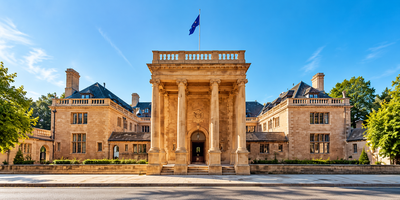
OCTOBER B4 Members Lunch at Rhodes House
B4 Members are invited to join us for a lunch at Rhodes House, a beautiful setting for a relaxed dinner.
This event is limited to 12 members.
Join B4 Members for a relaxed private lunch at the magnificent Rhodes House. There’s no formal structure – simply come along to connect with fellow B4 Members whilst enjoying a fabulous buffet lunch with drinks included, surrounded by the historic setting of Rhodes House.
About Rhodes House
Since its opening in 1929, Rhodes House has been an Oxford landmark, a historic Grade II* listed venue in the heart of the city.
Home to the Rhodes Trust and still the symbolic home of Rhodes Scholars worldwide, our iconic spaces are ideal for your next event. The handcrafted interiors have been sensitively restored while modern conference facilities with advanced technology have been added, creating an exceptional guest experience.
Rhodes House is the perfect Oxford location for meetings and conferences, wedding ceremonies and receptions, celebrations and special occasions, private dining, and filming & photo shoots. With five unique function rooms, beautiful private gardens, and 34 beautiful en-suite bedrooms, there is a space for every type of event.
Lunch
Our lunch will be hosted in Atlantic Dining Room.
Parking
There is no on-site visitor parking at Rhodes House. Limited parking is available on surrounding roads.
Please ensure you check all parking signage before leaving your vehicle to avoid any parking fines.
Transport
For professional chauffeur services, please contact Nick Breakspear at Royal Cars (B4 Platinum Member): nick.breakspear@royal-cars.com
Nick and his team will be pleased to assist with transport for this event or any of your private car requirements.
Date: 30/10/2026
Time: 12:30 - 14:00
Venue: Rhodes House
04
Nov
2026
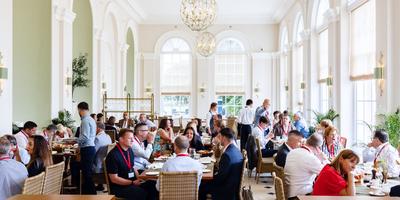
B4 Platinum Breakfast at Blenheim Palace
Join B4 at Blenheim to find out more about Platinum Membership.
Join 50 of Oxfordshire’s leading businesses in The Orangery at Blenheim Palace with guest speakers Niall Kingston, General Manager and Jamie Purcell, Director of Sales
A New Chapter for Le Manoir aux Quat’Saisons
Le Manoir aux Quat’Saisons, A Belmond Hotel, Oxfordshire, is entering an exciting new chapter, with a visionary redevelopment set to reimagine the celebrated destination while preserving its heritage and pioneering spirit.
Following more than four decades of the most refined hospitality and gastronomy, Le Manoir closed in January 2026 for an extensive refurbishment, with reopening planned for summer 2027. The transformation will enhance its accommodation, culinary spaces, gardens and guest experience.
At its heart remains the enduring connection between gastronomy, nature and the Oxfordshire landscape. Building on Raymond Blanc OBE’s legacy and garden-to-plate philosophy, acclaimed three-Michelin-starred chef Arnaud Donckele will lead a new era of gastronomy, bringing his poetic vision to Le Manoir while celebrating nature, seasonality, provenance and the richness of Oxfordshire.
About Niall Kingston
Niall Kingston is General Manager of Le Manoir aux Quat’Saisons, A Belmond Hotel, where he is leading one of the most significant transformations in the property’s history as it prepares for its next chapter.
A passionate hotelier, Niall has built his career around the belief that truly exceptional hospitality comes from the combination of extraordinary people, uncompromising standards and genuine warmth. His leadership style is ambitious but grounded, with a strong emphasis on developing people, empowering teams and applying common sense to create memorable guest experiences.
At Le Manoir, Niall is overseeing a major multi-year redevelopment while helping shape the future vision of one of Britain’s most celebrated hotels. His remit spans hotel operations, food and beverage, gardens, wellness, culture, talent and the evolution of the guest experience, with the ambition of positioning Le Manoir among the very finest hotels in the world.
He is particularly passionate about creating hospitality that feels personal rather than scripted where craftsmanship, creativity, generosity and a strong sense of place come together. For Niall, great luxury ultimately starts with great people and the culture created around them.
Important: This event is by invitation only and guests can only register with the ACCESS Code provided.
Please note - Guests can only attend this event via private invitation of a B4 Member and prior agreement with B4 OR via invitation by B4.
We have limited capacity for this event so please register ASAP to avoid disappointment.
More About B4 Platinum
Our members genuinely care about supporting one another and collectively we can help each other unlock solutions for growth against a backdrop of a challenging economy, changing consumer demand, and new and emerging technologies.
As such, we have identified numerous organisations that would be excellent partners of B4. We’re looking to build a signature membership of talented, caring, and forward-thinking companies with whom we can collaborate to achieve our vision, which is based upon five enabling principles of community, voice, learning, connections and celebrations.
B4 was established 20 years ago, and what we have learnt from our members over the years is that they value the diverse range of organisations that make up the B4 community. They are also keen to welcome new members to experience the broader impact that a growing community can deliver for themselves and others.
If you’re passionate about supporting others, have a desire to learn and want to see growth for all Oxfordshire businesses, please do get in touch with B4 to find out more by contacting richard@b4-business.com.
IMPORTANT Parking Information
Parking available on-site. IMPORTANT Please do not park outside the palace as this is no longer permitted. ALL guests are to park in the main car park ONLY and walk down to The Orangery.
Date: 04/11/2026
Time: 7:45 - 10:00
Venue: Blenheim Palace
05
Nov
2026

Breakfast & Better Business Ecosystem Roundtable
B4 Better Business Ecosystem Roundtable hosted at Freeths LLP
Join Grant Hayward of OSEP, and other local businesses at our Better Business Ecosystem Roundtable at Freeths LLP
About the Ecosystem
Increasingly, companies recognise that business success is more than just making profit, and the essential ingredients demand that businesses operate in new and evolving ways. It is vital for companies to have positive impacts on society and the environment, as well as the economy. People want to work for, buy from, supply to, and increasingly, invest in, businesses that operate in these ways. But how do business leaders achieve this? This isn’t about philanthropy, “giving back”, or just “doing some nice things” on the side. This is about creative, innovative and evolving business models.
The B4 Better Business Ecosystem is a great opportunity to meet and engage with like-minded local businesses to learn and share, and this roundtable is an ideal face to face forum to explore ways in which companies can, and are, doing “Better Business”.
About Grant Hayward
After 30 years in the corporate world trading commodity products, Grant operates in a world surrounded by inspirational people and organisations and has truly found his place supporting and encouraging business as a force for good to make society and the world a far better place. Grant draws upon his extensive corporate career and voluntary sector experience. He has been supporting Richard and the B4 team for a number of years to embrace the shift and “awakening” within the business community to the opportunities and benefits of becoming more purposeful.
Grant has trained with the B Corp movement and is a “B Leader”, having championed the movement even before it launched in the UK. He is also Co-Chair of one of the first “B Local” groups to be established in the UK, here in Oxfordshire.Grant focuses almost all of his efforts through OSEP, a community Interest company, which has established itself across Oxfordshire to provide support for impactful businesses and also works closely with other key stakeholders across sectors in the county including OxLEP, the universities, local authorities and voluntary sector support organisations to help ensure the strong local economy we enjoy is even more inclusive and one that works for everyone.
Event is strictly limited to 30 guests.
Pastries and refreshments will be provided for this event.
Date: 05/11/2026
Time: 8:00 - 10:00
Venue: Freeths LLP
10
Nov
2026
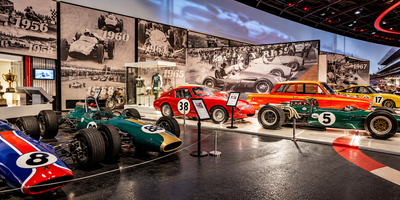
Corum Quarterly at Silverstone Interactive Museum
Join Corum Quarterly, where senior decision-makers share experiences, discuss strategy & shape new ideas through trusted peer conversations.
Corum Members Only
Join us for the fourth B4 Corum Quarterly at Silverstone Interactive Museum as we bring together leading experts for an insightful panel discussion exploring the challenges, opportunities and innovations shaping the future.
Topic for discussion to be confirmed shortly
About Phil Lawrie, CEO, Silverstone Museum
Phil Lawrie is CEO of Silverstone Museum and a Trustee of Silverstone Heritage Limited, joining the organisation in July 2023. An experienced international business leader, Phil oversees the Museum’s strategy, development, sustainability and operations. Prior to joining Silverstone, he spent 13 years with Qatar Museums, including as Chief Commercial Officer, and has held senior positions with globally recognised organisations including Al Jazeera Media Network, Turner Broadcasting System and American Express. Today, Phil leads Silverstone Museum as it continues to celebrate and preserve the remarkable heritage of British motor racing, while inspiring future generations through education, innovation and engaging visitor experiences.
About Silverstone Museum
Step into the heart of British motor racing at Silverstone Museum, located at the iconic Silverstone Circuit in Northamptonshire, UK. Explore immersive exhibits, legendary cars, and the stories of racing heroes that shaped history. Whether you're a motorsport fan or curious about British heritage, the Silverstone Museum promises an unforgettable, high-speed adventure!
Event is strictly limited to 50 guests.
Light breakfast of pastries and refreshments will be provided for this event.
Parking: Ample free parking available on-site
Date: 10/11/2026
Time: 8:00 - 10:00
Venue: Silverstone Interactive Museum
12
Nov
2026

Charity Ecosystem
Connect with other charity Members in the B4 community to help one another become stronger
Join us for the inaugural charity ecosystem to discuss what members want and can get out of our latest addition to this interactive, thought-provoking and incredibly powerful series of events hosted by Niamh Walshe, Head of Development, The Story Museum
Topic: FURTHER INFORMATION TO BE CONFIRMED SOON
About The Story Museum
The Story Museum exists to enrich young lives through stories. Through our immersive galleries, exciting events, and creative learning programme, we celebrate stories in all their forms and their enduring power to change lives. Our outreach takes place in the community and at the museum, building creativity, literacy, and wellbeing at every key stage. We use stories because we know they work. They expand children’s worlds and are fundamental to developing oracy and literacy skills – vital for improving life chances. Our work transforms the skills and confidence of participants, and our impact has been evidenced time and time again.
Parking: Nearest parking is Westgate but some people may find park & ride easier. Travel info is here - Getting Here | Plan Your Visit | The Story Museum
Arrival instructions: Head to the shop on arrival and a member of the team can help guests find their way to the meeting room.
Light refreshments tea, coffee & cake will be provided.
B4 Members only.
Date: 12/11/2026
Time: 14:30 - 16:30
Venue: The Story Museum