B4 Events
Over 60 events a year, from leadership challenge discussions to large-scale summits
21
Jul
2026

Corum Six Breakfast with Simon Blake at The Quad
Join us and Corum members for a discussion around Building a leadership team you truly trust
Join us and Corum members for a discussion around Building a leadership team you truly trust on Tuesday 21st July from 8:00–10:00am, bringing together a small group of senior executives for an informal and open discussion over breakfast.
The conversation will centre on the practical experiences to date of AI, the challenges of choosing products, keeping up with the latest updates, training, keeping policies up to date, and the impact on long term staffing and pricing. A relaxed opportunity to connect, share perspectives and experiences, and explore ideas and challenges within our organisations.
About Simon Blake
Simon Blake is a member of the Strategic Corporate Finance department within Price Bailey. He has extensive knowledge and experience with owner managed businesses and has done a great deal of work on management buyouts and employee ownership trusts. Simon also led the recent purchase of our Oxford office.
About Price Bailey
Established in 1938, Price Bailey is a top 40 accountancy and business advisory firm, providing a wide variety of expert financial, tax, and strategic support to individuals and companies – regionally, nationally, and internationally.
As a leading firm of chartered accountants and business advisers, we understand the importance of providing you with a range of modern services to complement traditional accounting services. We have specialist teams covering tax consultancy, corporate finance, strategic planning, private wealth management, and employment law.
We offer our clients a first-rate personable service, creating strong relationships and connections, and helping great businesses and individuals alike to navigate challenges successfully and take advantage of exciting opportunities.
Price Bailey’s Oxford office was open in May 2024, located in the Quad building at Lambourn House. Price Bailey’s expansion into Oxford marks our 13th office location both in the UK and internationally.
Benefiting from the East-West rail connection linking Oxford and Cambridge, and the prominent London-Cambridge-Oxford bio-medical/high-tech triangle, Oxford is renowned for its diverse economic base, including businesses specialising in the education, research, technology, and manufacturing sectors.
We provide our services to clients ranging from small local businesses to larger corporate companies and businesses trading overseas. We also act for academic institutions, research organisations, and high-tech companies.
Limited to 10 guests
Parking: Limited parking available on-site. Parking available in the surrounding roads. Please read parking signs before leaving your vehicles to avoid parking fines.
Pastries and Refreshments will be provided
Date: 21/07/2026
Time: 8:00 - 10:00
Venue: Price Bailey, The Quad, Lambourne House,
13
Aug
2026

B4 Signature Breakfast at Blenheim Palace
Join B4 at Blenheim to find out more about Signature Membership.
Join 50 of Oxfordshire’s leading businesses in The Orangery at Blenheim Palace to hear from B4’s special guest Georgie Spurling, ARVRA Wellness
About Georgie Spurling
Founder & CEO, ARVRA Wellness
Born with a rare heart condition and told exercise would never be part of her life, Georgie challenged that narrative and built a career around evidence-led, accessible wellbeing. After studying the connection between physical and mental health, she developed a measurable, low-impact approach supporting stress, injury and chronic illness management. ARVRA was created to deliver a scalable, human-led wellbeing ecosystem focused on prevention and long-term health outcomes.
About ARVRA Wellness
ARVRA empowers people to live healthier, happier, longer lives through personalised,
accessible, and holistic wellness solutions that make feeling good simple and achievable for
everyone.
ARVRA is a complete wellness platform designed to make holistic health accessible to all,
not just the privileged few. Through expert-led content, personalised support, and guidance
across movement, nutrition, hormones, mindfulness, and stress, we help individuals and
organisations build sustainable wellbeing habits that fit effortlessly into everyday life. ARVRA
makes wellness simple, supportive, and empowering so every user can thrive physically,
mentally, and emotionally.
Important: This event is by invitation only and guests can only register with the ACCESS Code BREAKPLAT0608
Guest Invitations by members
Please note - Guests can only attend this event via private invitation of a B4 Member and prior agreement with B4 OR via invitation by B4.
We have limited capacity for this event so please register ASAP to avoid disappointment.
More About B4 Signature
Our members genuinely care about supporting one another and collectively we can help each other unlock solutions for growth against a backdrop of a challenging economy, changing consumer demand, and new and emerging technologies.
As such, we have identified numerous organisations that would be excellent partners of B4. We’re looking to build a platinum membership of talented, caring, and forward-thinking companies with whom we can collaborate to achieve our vision, which is based upon five enabling principles of community, voice, learning, connections and celebrations.
B4 was established 19 years ago, and what we have learnt from our members over the years is that they value the diverse range of organisations that make up the B4 community. They are also keen to welcome new members to experience the broader impact that a growing community can deliver for themselves and others.
If you’re passionate about supporting others, have a desire to learn and want to see growth for all Oxfordshire businesses, please do get in touch with B4 to find out more by contacting richard@b4-business.com.
IMPORTANT Parking Information
Parking available on-site. IMPORTANT Please do not park outside the palace as this is no longer permitted. ALL guests are to park in the main car park ONLY and walk down to The Orangery.
Date: 13/08/2026
Time: 7:45 - 10:00
Venue: Blenheim Palace
17
Sep
2026
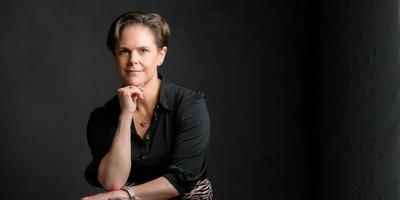
PEOPLE Ecosystem Roundtable discussion at B4 HQ
Join B4 and our members for a People Ecosystem Roundtable discussion hosted by Claire Croft, Claire Croft Associates
Join fellow B4 members at our next PEOPLE Ecosystem Roundtable at B4 HQ.
We’re delighted to welcome Claire Croft, Owner of Claire Croft Associates Ltd, who will be leading the discussion.
Topic: To be confirmed soon.
About Claire Croft
Owner, Claire Croft Associates Ltd
Claire Croft is an executive coach and culture change consultant who helps leaders and leadership teams move beyond limiting patterns and perform at their best. She works with clients during pivotal moments of growth and change, helping them build clarity, confidence and cohesion — so they can work more effectively together and feel more energised in what they do.
Claire is known for her ability to spot what is getting in the way, especially the things that are not being said but are shaping outcomes. Taking a systemic approach, she helps clients understand what needs to shift — not just at an individual level, but across the wider context they operate within. Her work is strategic, commercially grounded and focused on delivering meaningful, lasting impact.
Her culture change work has been recognised through several industry awards, reflecting the impact and sustainability of the change achieved. Claire has worked with organisations including Invesco, Virgin, Unipart, TMS, The Jockey Club and Be Free Young Carers across a range of leadership and organisational challenges.
This event is strictly limited to 15 Guests
Parking: Ample parking on-site
Refreshments will be provided
Date: 17/09/2026
Time: 14:30 - 16:30
Venue: The Stables at The Moat
24
Sep
2026

AI Ecosystem Roundtable with Marnie Wills, Business With AI Strategist
B4 AI Roundtable hosted at B4 HQ.
Join Marnie Wills, Business With AI Strategist for our next Ecosystem Roundtable at B4.
About Marnie Wills | AI Activist, Trainer & Strategy Consultant
Marnie Wills is an AI Activist, Trainer, and Strategy Consultant with a passion for helping businesses move from AI curiosity to AI confidence. As the founder of Business with AI Strategist, Marnie works with established businesses and leadership teams to build AI operating systems that will ensure they are ahead of this digital transformation.
Her approach goes far beyond the basics. Marnie specialises in customising business intelligence systems, building proprietary tools and applications, and deploying agents that multiply output without replacing the people behind it. For Marnie, the real power of AI lies in amplifying human capability and expanding business capacity , not substituting it.
Event is strictly limited to 15 guests.
Breakfast will be provided for this event.
Date: 24/09/2026
Time: 9:00 - 11:00
Venue: The Stables at The Moat
01
Oct
2026

BDM Ecosystem Roundtable with Caroline O’Connor of Fourth Born
Join B4 for a Business Development Managers Roundtable discussion hosted at B4 HQ.
This event is limited to 15 members.
Join fellow Business Development Managers from the B4 community as they share challenges, successes and advice with each other in the fourth BDM Ecosystem Roundtable discussion at B4 HQ
The session will be facilitated by Fourth Born's Caroline O'Connor and Marnie Wills, Business With AI Strategist
This event is suitable for: SME founders, directors, consultants, sales/business development and marketing leads who want more meetings from fewer, better-fit prospects.
Topic - The SME Biz Dev Playbook: AI Research, Personalised Outreach & Content Repurposing
About the discussion
Most SMEs don’t have a lead problem — they have a time, consistency and follow‑up problem. In this fast-paced 60‑minute session, Marnie Wills will show you two practical AI workflows you can use straight away to accelerate business development: (1) lead generation research (finding the right prospects and building quick “deep profiles”), and (2) genuinely personalised outreach that still sounds like you.You’ll see the workflows demonstrated live.
What you’ll learn
• A simple “AI workflow map” for biz dev: inputs → prompt → output → next action.
• How to research prospects quickly and spot relevant angles (without falling into a Google rabbit hole).
• How to turn research into personal, high-response outreach (LinkedIn/email) with clear next steps.
• (Bonus) How to repurpose one idea into 3–5 pieces of outreach/content that support conversion.
What you’ll leave with
• 2 reusable prompt templates: Lead Gen Research + Personalised Outreach.
• Practical guidance on boundaries: what not to automate, and how to protect your reputation when using AI for outreach.
About Marnie Wills
Marnie Wills is an AI trainer and business strategist who helps the humans in businesses become AI proficient (moving from AI User to AI Builder) so they can contribute to the business becoming more capable — and therefore make more money and impact. Her work focuses on turning AI into practical, repeatable workflows that support commercial outcomes, especially in business development, marketing and client conversion. Marnie is known for making AI accessible to non-technical teams, building confidence, judgement and consistency across the whole organisation
This event includes light breakfast and refreshments
Parking: Ample parking on-site.
Date: 01/10/2026
Time: 9:00 - 11:00
Venue: The Stables at The Moat
07
Oct
2026

Corum Six Breakfast with Andy Whittard at B4 HQ
Join us and Corum members for a discussion around Building a leadership team you truly trust
Join us for a Corum Six breakfast on Wednesday 7th October from 8:00–10:00am, bringing together a small group of senior executives for an informal and open discussion over breakfast.
The conversation will centre on “Building a leadership team you truly trust”. A relaxed opportunity to connect, share perspectives and experiences, and explore ideas and challenges within our organisations.
About Andy Whittard
Andy Whittard is the former Managing Director of Cherwell Laboratories, a second-generation SME manufacturing business based in Bicester. During his 20-year tenure, he successfully led the company's growth to £10 million in revenue before overseeing its sale to a larger group.
A key part of Andy's success was building and developing a high-performing leadership team that continues to run the business today. Through this journey, he gained extensive experience in business growth, succession planning, and organisational development, alongside valuable expertise in modern digital sales and marketing strategies.
Drawing on both his entrepreneurial and leadership experience, Andy brings practical insight into scaling businesses, embracing change, and navigating the opportunities and challenges facing SMEs in today's rapidly evolving business environment.
Limited to 8 guests
Parking: Ample parking onsite
Pastries and Refreshments will be provided
Date: 07/10/2026
Time: 8:00 - 10:00
Venue: The Moat