B4 Events
Over 60 events a year, from leadership challenge discussions to large-scale summits
10
Jun
2026
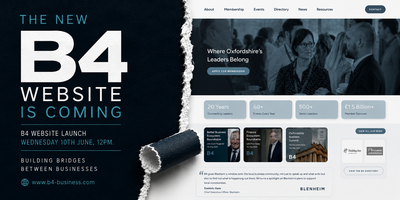
B4 Website Launch
B4 launches its brand new website — connecting leaders, showcasing members and building stronger business relationships across Oxfordshire.
After 20 years of building trusted business relationships, creating meaningful conversations and connecting leaders across Oxfordshire and beyond, we’re excited to announce the launch of the brand new B4 website.
This isn’t just a fresh look. It’s a complete evolution of how our community connects, collaborates and grows together.
The new platform has been designed to:
✅ Showcase the incredible organisations and people within B4
✅ Make it easier to discover events, opportunities and insights
✅ Create stronger connections between members
✅ Support the next phase of growth for our business community
✅ Reflect the energy, ambition and quality of the B4 brand
Over the past two decades, B4 has grown into far more than a network. It’s a trusted community built on relationships, collaboration and shared ambition — and this new website represents an exciting new chapter in that journey.
A huge thank you to Elle Iannaccone, Robin Garnett, Emma Hearn, Tam and the brilliant team at Creative Collective UK for their incredible hard work, creativity and commitment throughout this project. We’re proud of what we’ve built together.
Join Us Online
To mark the launch, we’ll be hosting a short online session to:
- Introduce the new B4 website
- Showcase key features and functionality
- Share the thinking behind the platform
- Discuss where B4 is heading next
Whether you’re an existing member, partner or someone interested in learning more about the B4 community, we’d love you to join us.
If you’re not currently a member of B4 and would like to attend the launch and discover more about the community, please contact Richard Rosser directly at richard@b4-business.com
Date: 10/06/2026
Time: 12:00 - 12:30
Venue: Online Event
11
Jun
2026
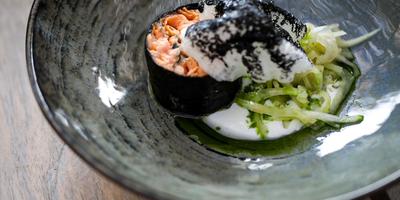
B4 Mid-Summer Signature Dinner in The Yurt at Nicholsons
B4 Members are invited to join us for a mid-summer’s dinner in The Yurt at Nicholsons, a beautiful setting for a relaxed dinner.
‘Following reception drinks and canapés, we’ll hear from Nicholsons, who will tell us more about the organisation’s new business structure, followed by a sumptuous three-course meal using seasonal produce. All guests will have the opportunity to choose from three starters, mains and desserts.
Places are limited to just 56 so please do book early to avoid disappointment. Guests will be seated on tables of eight so if you would like to book one of the seven tables of eight for you and your guests, please select this option.
About The Yurt
A magical atmosphere awaits at the Michelin Bib Gourmand restaurant, where every dish is crafted with care by The Yurt's passionate Head Chef, Andrew Carr. He draws inspiration from The Yurt's own kitchen gardens and the local bounty of North Aston Farm to create exceptional, memorable meals.
About Nicholsons
Nicholsons is an environmental consultancy and contracting business, committed to delivering nature-positive projects. With landscapes, forestry and ecology services available individually or collectively, we support clients in Oxfordshire, Northamptonshire and Gloucestershire, combining in-depth industry knowledge and a pragmatic approach to project management. Our unified ecosystem approach delivers technical expertise and project delivery for sustainable, long‑term impact.
We are proud of our project portfolio, working on private residential properties, country estates, forestry and woodland enterprises, farmland and sustainable commercial developments. Much of our work is not in the public domain, as we are the trusted partners on many non-disclosure projects.
Underpinned by Nicholsons’ family values, our passionate team of 160 professionals work collaboratively with clients, colleagues and fellow industry professionals, ensuring that every project detail is thoughtfully planned using our in-house project excellence framework to create a seamless client journey from project conception to completion.
Dress code: Summer Dress (please note The Yurt can get quite warm on hot days so lightweight clothing is recommended) – with good footwear for uneven surfaces.
Parking: Ample parking on-site
Dietary requirements: Please notify us of any allergies or dietary requirements at the time of booking.
Transport: Please do contact Nick Breakspear from B4 Platinum Members Royal Cars at nick.breakspear@royal-cars.com to book transportation for this event if required. Nick will be pleased to assist with any requirements you may have for this event or your general private car needs.’
Date: 11/06/2026
Time: 18:45 - 22:00
Venue: The Yurt at Nicholsons
17
Jun
2026
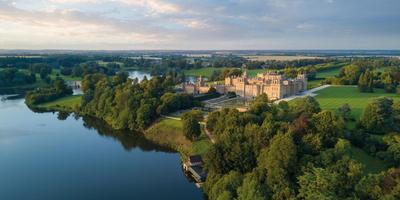
Corum Quarterly: AI at Blenheim Palace
Join AI specialist Marnie Wills and Blenheim’s David Green for practical AI insights, strategy and future-focused discussion.
Join us for the second B4 Corum Quarterly at the stunning Blenheim Palace as we explore one of the most important business topics of our time: artificial intelligence and the future of leadership, operations and innovation.
Facilitated by B4 AI Specialist, Marnie Wills, this interactive session will provide practical insights and actionable advice for businesses looking to move beyond AI curiosity and begin implementing meaningful AI strategies within their organisations.
Marnie will share valuable guidance on how businesses can confidently embrace AI, improve productivity, and future-proof their operations before hosting an in-depth discussion with David Green, Head of Innovation at Blenheim Palace. Together, they will explore Blenheim’s AI strategy, how AI is already transforming operations within the heritage sector, and what the future of intelligent technology adoption could look like for organisations of all sizes.
This exclusive Ecosystem Roundtable offers an opportunity to hear from two forward-thinking leaders at the forefront of AI implementation, whilst connecting with fellow business leaders navigating similar opportunities and challenges.
About Marnie Wills
Marnie Wills is an AI Activist, Trainer and Strategy Consultant with a passion for helping businesses move from AI curiosity to AI confidence. As the founder of Business with AI Strategist, Marnie works with established businesses and leadership teams to build AI operating systems that position organisations ahead of today’s digital transformation.
Her approach goes far beyond the basics of AI adoption. Marnie specialises in designing customised business intelligence systems, building proprietary tools and applications, and deploying AI agents that multiply business output whilst empowering the people behind it. She believes the true power of AI lies in amplifying human capability, increasing capacity, and enabling teams to work smarter rather than replacing them.
Known for her practical, engaging and accessible approach, Marnie helps businesses cut through the noise surrounding AI and focus on meaningful implementation strategies that deliver real commercial value.
About David Green
David Green is a pionering technology and data leader in the heritage sector, combining more than 25 years of hands-on operational experience with a passion for innovation and artificial intelligence. Beginning his career at Blenheim Palace at the age of 18, David has built a reputation for transforming how heritage organisations use technology to improve decision-making, conservation, and visitor experience.
As a champion of data-driven operations, David has led the development of AI-powered systems that integrate operational, environmental, financial, and behavioural data into intelligent platforms capable of predicting visitor flows, improving staffing efficiency, and enhancing conservation planning. His work demonstrates how historic organisations can embrace cutting-edge technology while preserving the human expertise essential to caring for irreplaceable heritage assets.
David is particularly recognised for his people-first approach to AI adoption, focusing on education, transparency, and collaboration to build trust across large teams. He believes technology should augment rather than replace human expertise, ensuring innovation strengthens both operational performance and cultural stewardship. Alongside his role at Blenheim Palace, David also contributes to responsible AI discussions through his position on the Advisory Board for the School of Engineering, Computing and Mathematics at Oxford Brookes University.
Event is strictly limited to 50 guests.
Light breakfast of pastries and refreshments will be provided for this event.
Date: 17/06/2026
Time: 8:00 - 10:00
Venue: Blenheim Palace
18
Jun
2026

PEOPLE Ecosystem Roundtable discussion at B4 HQ
Join B4 and our members for a People Ecosystem Roundtable discussion hosted by Helen Fallon, Helen Fallon Consulting and guest
Join us at B4 HQ for an insightful early-morning People Ecosystem breakfast session with Helen Fallon, Helen Fallon Consulting and Lorraine Hardingham, SimpliFiHR
Discussion will cover
- What to do before you recruit
- Recruitment processes
- HR, Legislation and the legal stuff
- Onboarding and ensuring a seamless probation period.
This is an opportunity to come together to share challenges, successes, and practical advice in an open and collaborative setting.
The session will be facilitated by Helen Fallon Consultancy (Helen Fallon) and Lorraine Hardingham, SimplifiHR, bringing valuable insight and guidance to the discussion.
About Helen Fallon of Helen Fallon Consultancy
With over 25 years of experience in the recruitment industry, I have dedicated my career to solving complex hiring challenges for small and medium sized enterprises. As the Managing Director of a specialist recruitment consultancy, I take immense pride in helping businesses achieve long term success by connecting them with the right talent. My approach is down to earth, realistic, and deeply consultative.
Our presence at the Harwell Campus puts us right in the heart of the STEM community. This location allows me to stay closely connected to the innovation and talent driving the science and technology sectors. Throughout my two decades of supporting business growth, I have developed a high level of expertise in candidate generation and new business development. My work spans a diverse range of sectors, including technology, finance, e-commerce, and commercial roles.
I believe that a successful hire begins with a deep understanding of a company's unique culture and specific objectives. By investing time into these details, I can provide tailored advice on job descriptions and recruitment strategies that truly work. I am genuinely passionate about seeing businesses thrive. My mission is to build lasting partnerships through open communication and proactive talent searches.
If you are looking for a recruitment partner who values transparency and professional integrity, I would welcome the opportunity to discuss your goals. Please feel free to reach out to me so we can explore how the right people can support your future growth.
Lorraine Hardingham of SimpliFiHR
With over 30 years experience in HR, predominantly in the logistics and environmental sectors, I provide practical solutions to HR challenges in a human focused way to achieve the best outcomes for your small, growing business.
📄From day one, the very basics of employment contracts, right-to-work checks and necessary policies
⚖️Turning employment legislation into practical advice, guidance and support for growing businesses, helping you keep compliant in the ever changing world of employment
🙂 Supporting with tricky employment processes in an empathetic, human way.
Specialities:
✔️Collective and individual redundancy processes in non-unionised environments
✔️Advising on Disciplinary and Grievance processes
✔️Drafting policies and procedures in workable formats Whether you're a small business looking for HR guidance or a larger organisation needing ongoing HR support, I am here to help you navigate the complexities of HR with professionalism and expertise. Contact me today to discuss how I can support your business!
Limited to 15 guests
Parking: Ample parking onsite
Pastries and Refreshments will be provided
Date: 18/06/2026
Time: 9:00 - 11:00
Venue: The Moat
25
Jun
2026

AI Ecosystem Roundtable with Marnie Wills, Business With AI Strategist
B4 AI Roundtable hosted at B4 HQ.
Join Marnie Wills, Business With AI Strategist for our 1st Ecosystem Roundtable at B4.
About Marnie Wills | AI Activist, Trainer & Strategy Consultant
Marnie Wills is an AI Activist, Trainer, and Strategy Consultant with a passion for helping businesses move from AI curiosity to AI confidence. As the founder of Business with AI Strategist, Marnie works with established businesses and leadership teams to build AI operating systems that will ensure they are ahead of this digital transformation.
Her approach goes far beyond the basics. Marnie specialises in customising business intelligence systems, building proprietary tools and applications, and deploying agents that multiply output without replacing the people behind it. For Marnie, the real power of AI lies in amplifying human capability and expanding business capacity , not substituting it.
Event is strictly limited to 15 guests.
Light breakfast & refreshments will be provided.
Date: 25/06/2026
Time: 9:00 - 11:00
Venue: The Stables at The Moat
26
Jun
2026
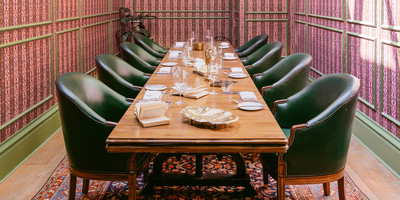
JUNE B4 Members Lunch at The Randolph Hotel a Graduate by Hilton Hotel
JUNE B4 Members Lunch
This event is strictly limited to 16 guests
JUNE B4 Members Lunch at The Randolph Hotel by Graduate Hotels.
Join B4 Members for a relaxed lunch at the chefs table. There’s no formal structure, just come along to connect with B4 Members and guests whilst enjoying a fabulous two course meal with drinks included.
The Randolph Hotel is an iconic landmark in the heart of the city taking inspiration from the prestigious Oxford University, with nods to college architecture and crests, as well as “Alice’s Adventures in Wonderland,” written by alumni Lewis Carroll.
This historic retreat is inspired by centuries of rich traditions, storied innovators and academic life and is just a few steps from the University of Oxford and its world famous colleges.
Parking: No parking available on-site. Closest parking will be Beaumont Street, OX1 2NP or St Giles OX1 3LZ (meter parking). Gloucester Green Car Park, OX1 2BN
Please check parking signage before leaving your vehicle to avoid parking fines.
Date: 26/06/2026
Time: 12:00 - 14:30
Venue: The Randolph Hotel, by Graduate Hotels